How to Choose the Right Pump Products for Your Needs?
Choosing the right pump products can be challenging. Many options exist in today's market. Each type serves its unique purpose. Understanding your specific needs is essential.
Start by identifying the application. Will you use the pump for water transfer, chemical handling, or something else? Consider flow rates and pressure requirements. Match these factors to the right pump type.
Sometimes, we overlook specifications. We might choose based on looks or price alone. Evaluating performance is crucial. Seek advice, read reviews, and reflect on your choices. Ensuring you select the best pump products can save time and resources in the long run.
Understanding Different Types of Pumps and Their Applications
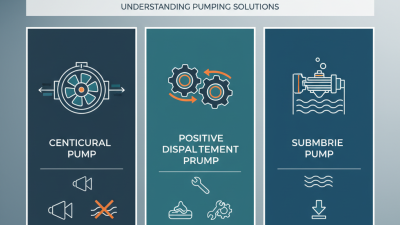
When selecting a pump, understanding the various types is crucial. Centrifugal pumps are popular for moving fluids. They work by converting rotational energy into fluid motion. These pumps excel in applications like irrigation, water supply, and even industrial processing.
On the other hand, positive displacement pumps offer different benefits. They push fluid through the system with a set volume. This type is ideal for high-viscosity fluids and certain chemical applications. They maintain a constant flow rate regardless of pressure changes. However, their design may lead to more complex maintenance needs.
Consider the specific requirements of your project. Are you dealing with clean water or viscous chemicals? Each pump type has its limitations. Sometimes, even experienced users overlook these nuances. A wrong choice can lead to inefficiencies or even equipment failure. Reflecting on your needs is essential before making a decision.
Understanding the Different Types of Pumps and Their Applications
The following bar chart illustrates the various types of pumps and their common applications in different industries. This data can help you assess which pump might best suit your specific needs.
Evaluating Key Performance Specifications for Pump Selection
When selecting a pump, performance specifications are crucial. Flow rate, pressure, and efficiency are paramount. The U.S. Department of Energy states that energy-efficient pumps can reduce energy costs by 20-50%. Understanding these metrics can lead to significant savings.
Flow rate, measured in gallons per minute (GPM), affects productivity. For high-demand applications, consider options that offer higher GPM. However, high flow rates often come with trade-offs, such as increased energy consumption. Pressure ratings, indicated in psi, determine how well a pump can move fluids against resistance.
Efficiency is another key factor. Pumps with a 75% efficiency rating could waste 25% of energy. This inefficiency can become costly over time. Evaluating these specifications requires careful consideration. Accessing comprehensive performance data is essential. Relying solely on manufacturer specifications may not reflect real-world performance. User reviews and industry reports can provide additional insights.
Incorporating these metrics into your decision-making process is vital. However, remember that no single pump fits all scenarios. Each application has unique challenges. Some users may overlook compatibility issues with existing systems. Thus, thorough research and evaluation are necessary. Operators should reflect on their specific needs and potential limitations.
Assessing Compatibility with Your System and Fluid Characteristics
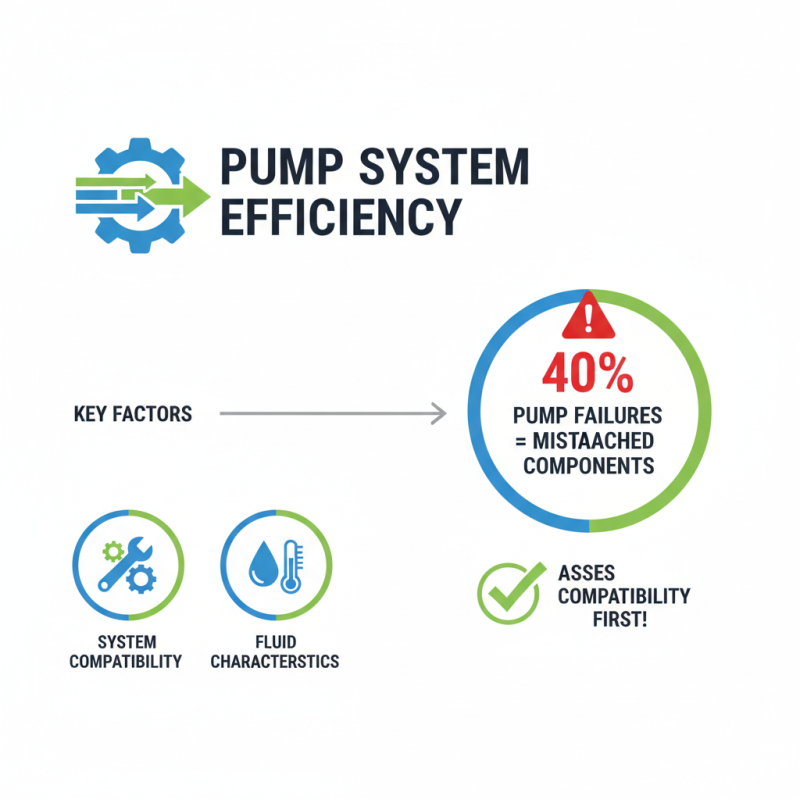
Choosing the right pump products is crucial for system efficiency. Compatibility with your existing system and fluid characteristics can significantly influence performance. According to a recent industry report, over 40% of pump failures are due to mismatched components. This highlights the importance of assessing compatibility before making a decision.
Fluid characteristics, such as viscosity, temperature, and chemical composition, play a vital role. For instance, a fluid with high viscosity may require a specific type of pump for optimal operation. Pumps that handle corrosive fluids must be made of compatible materials. Failure to consider these aspects can lead to increased maintenance costs and reduced pump lifespan.
While specifications are essential, they should not be the sole focus. Sometimes, less obvious issues can arise. For instance, the installation environment can impact pump performance. A pump might be rated for specific conditions, but real-life factors like temperature fluctuations can alter its effectiveness. Evaluating all variables remains critical for the selection process.
Cost Considerations and Budgeting for Pump Products
When budgeting for pump products, several factors come into play. Costs can vary widely based on the type of pump, its features, and its intended application. For instance, a standard centrifugal pump may range from $200 to $2,000. In contrast, more specialized pumps, such as those for food-grade applications, often exceed $5,000. Understanding the specifications and requirements of your project is crucial for making informed decisions.
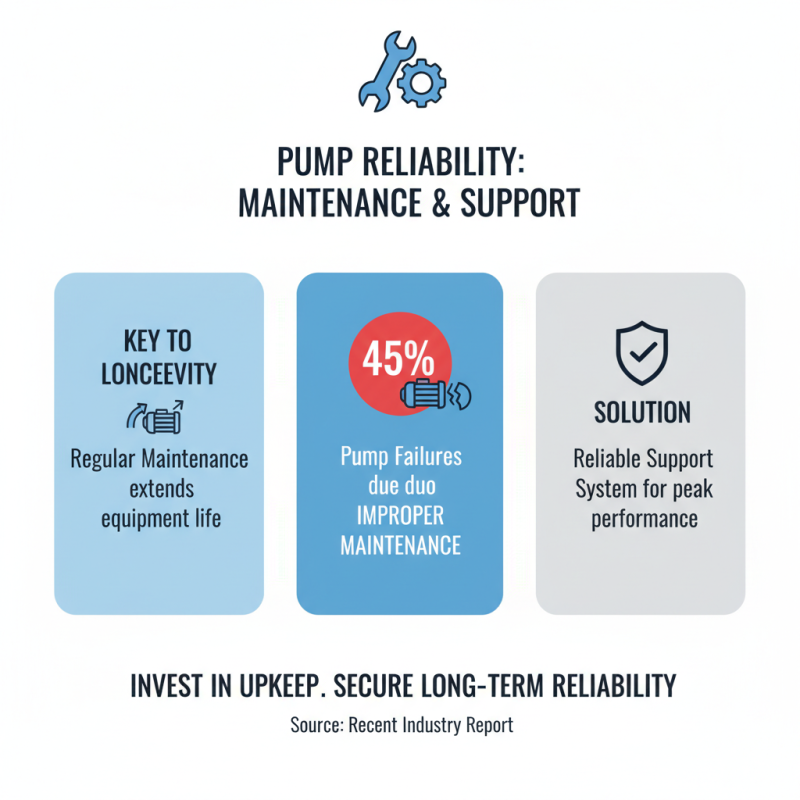
Industry reports indicate that maintenance costs also significantly contribute to the total expenditure. Studies show that maintenance can account for 30% of a pump's lifecycle costs. If a pump fails frequently, these costs can escalate quickly. Therefore, investing in a reliable product is essential. Choosing quality may mean higher upfront costs, but the long-term savings can be substantial.
Another factor is energy efficiency. Inefficient pumps can lead to increased energy bills. Reports suggest that up to 20% of pumping systems are inefficient. This inefficiency can inflate operational budgets over time. When selecting pump products, consider energy performance ratings. An initial higher investment in an energy-efficient model can result in considerable savings down the line. Such decisions require careful thought and sometimes, a deeper dive into data to avoid future regrets.